


Oldschool handmade electric guitar 32-2 Winston - SOLD!


Description
Important, notes about the price and delivery options are located at the end of the description.
Oldschool electric guitar 32-2 Winston - SOLD!
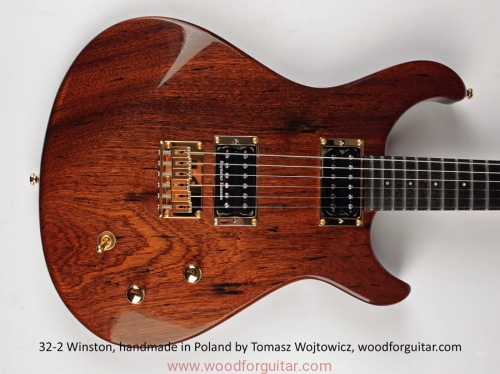
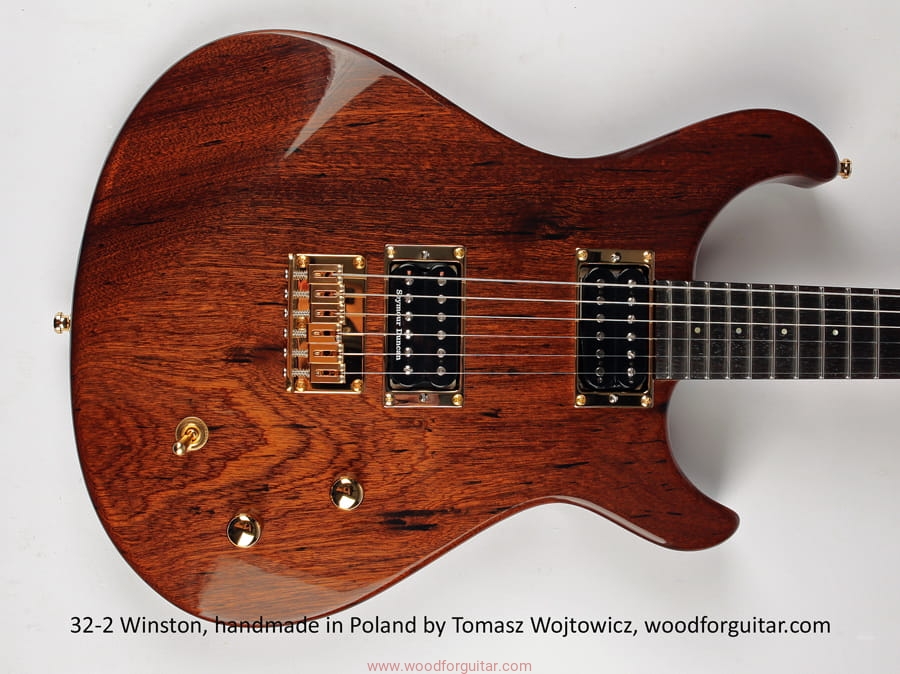
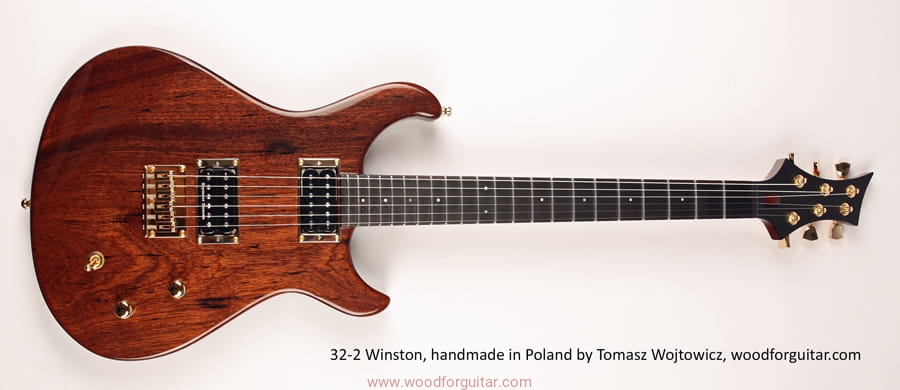
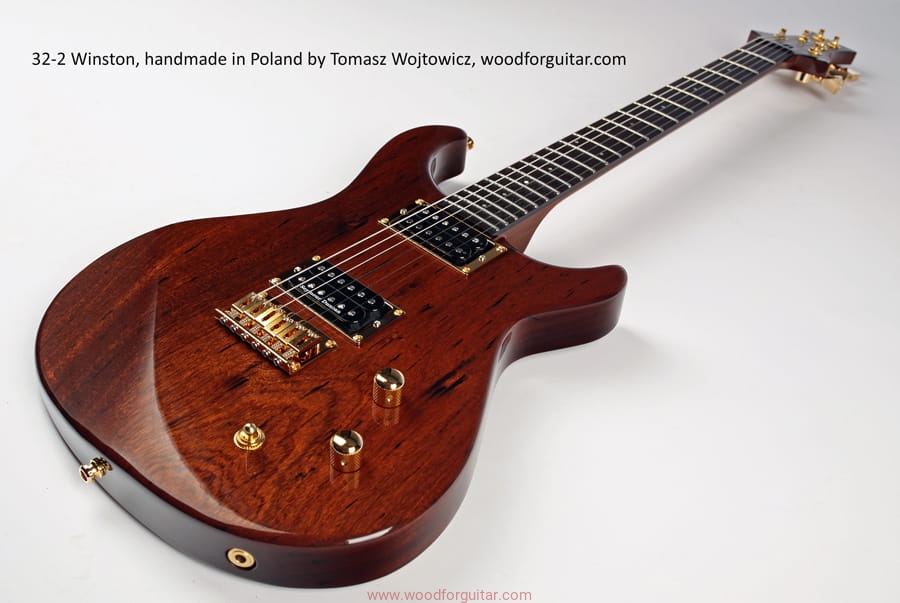
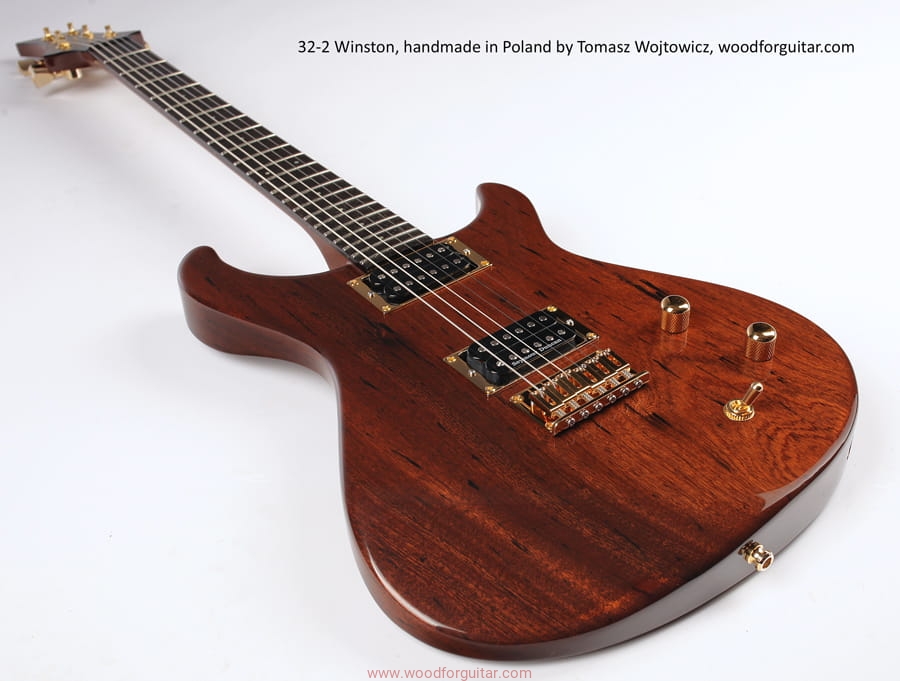
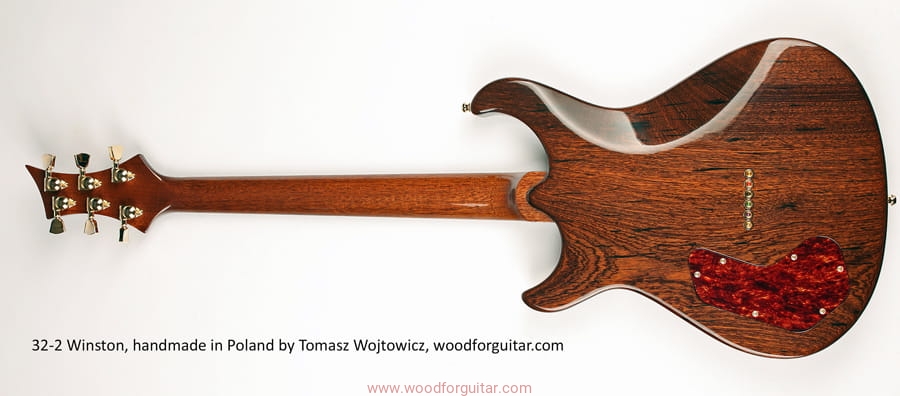
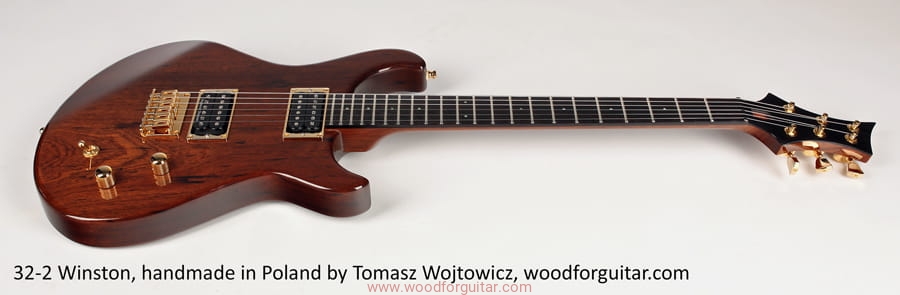
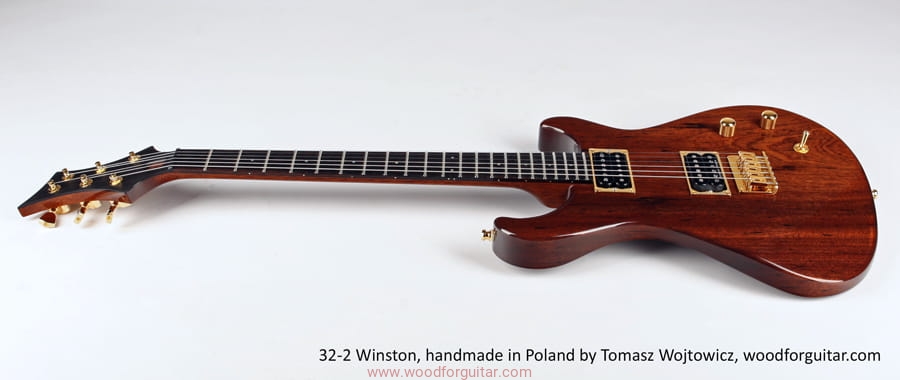
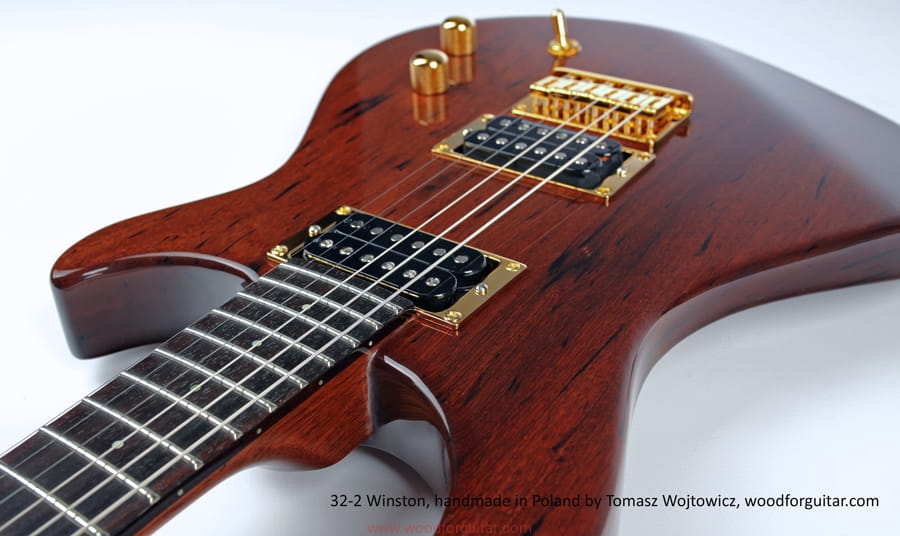
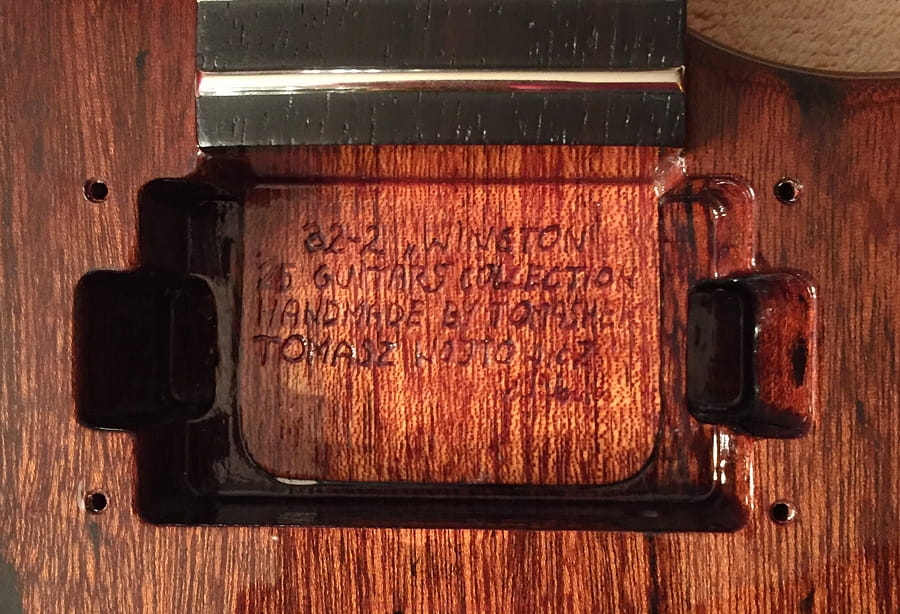
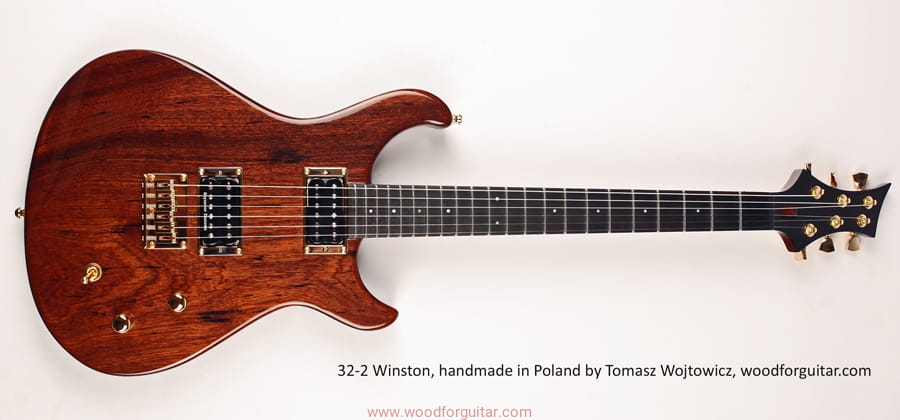
6-string electric guitar, serial number 32-2, nicknamed „Winston”, handmade in Poland by Tomasz Wojtowicz. One of the 25 guitars in the collection „25 guitars collection – handmade by Tomasz Wojtowicz”. The guitar was completed in October 2017, while the start of work on this instrument was dated at September 2005. The guitar was creating over 12 years. Winston is an oldschool guitar crafted to play, not to watch. Only fine quality classical wood species were used, seasoned long time, selected to harmonize together. This is a unique instrument, with own character. The sound is warm, fat, mahogany type, rich in harmonic components, long sustaining and rather aggressive. The design of the instrument, wood used and parts suggest the use in music genres such as blues, classic rock, hard rock and related genres. This does not mean, however, that you can’t play other music on this guitar. It depends on the type of amp, settings, and preferences. Humbuckers are deliberately used without the ability to split coils, to keep simplicity, but with a preference to high sound qualities. Winston is Bernard’s twin brother (completed in July 2017), but presents a different palette of sounds. The first connection to the amp revealed the true nature of the instrument. It was supposed to look something like this: “Hello, I’m Winston. I like cigars, good whisky and great challenges”. But in fact, Winston had a slightly different approach: “Hi, I’m a rough Winston”. And that’s it. If the sound of Bernard can be described in a nutshell as “sound after mastering studio work”, then sound of Winston can be described as: “sound like a mustang, it must be bridled first”.
Below are some general details and specification:
Body
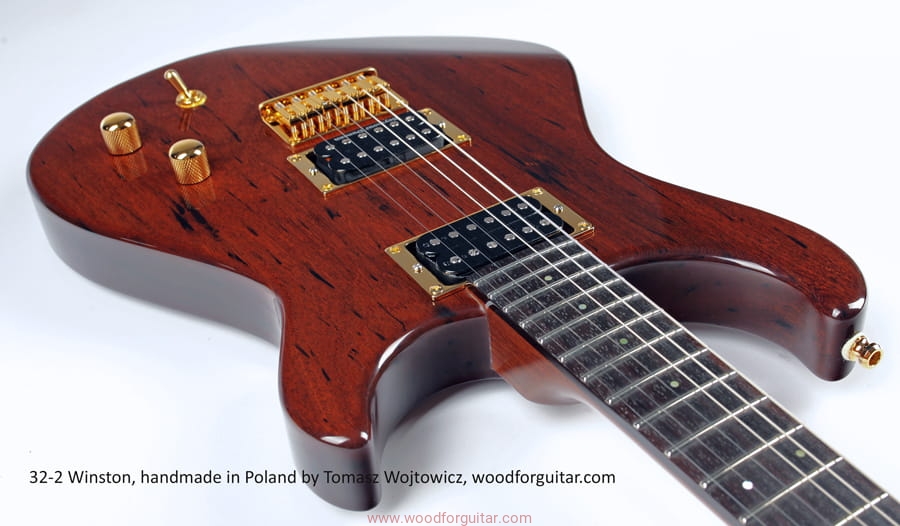
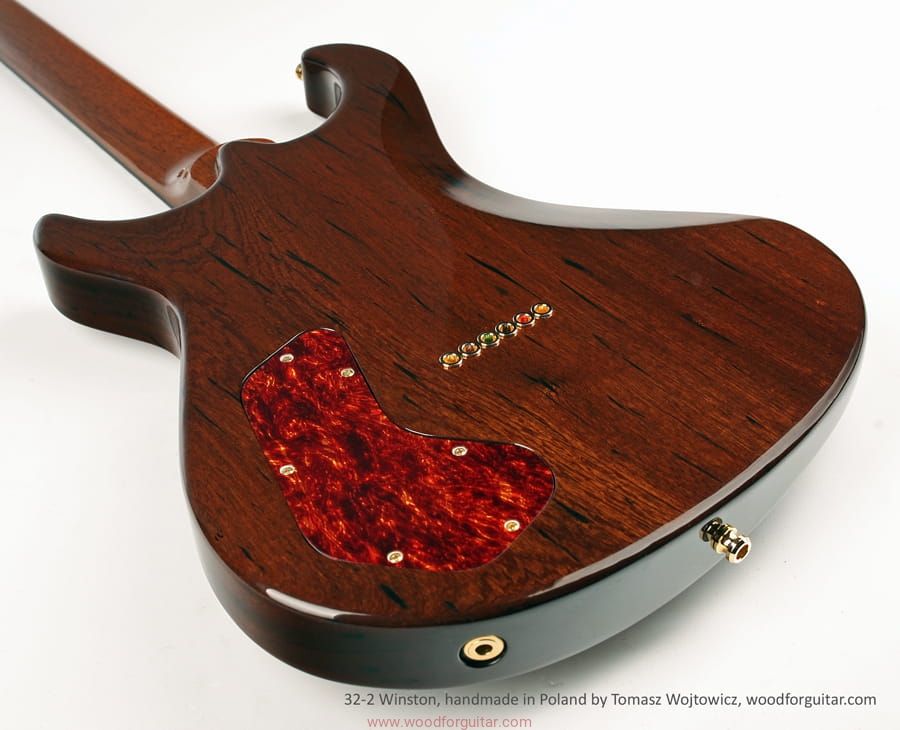
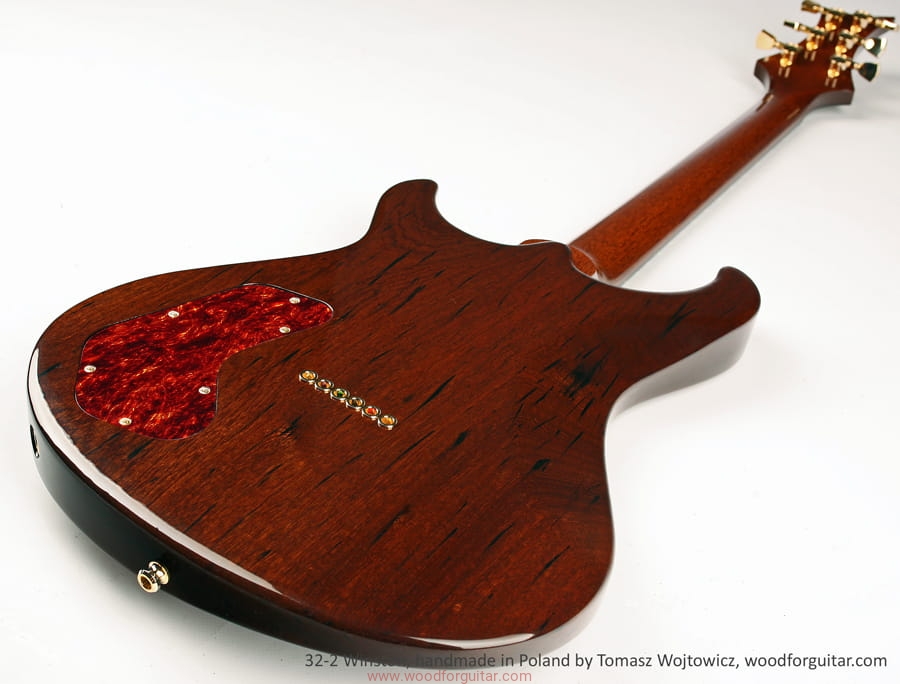
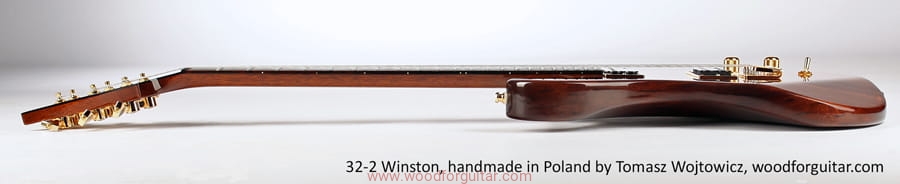
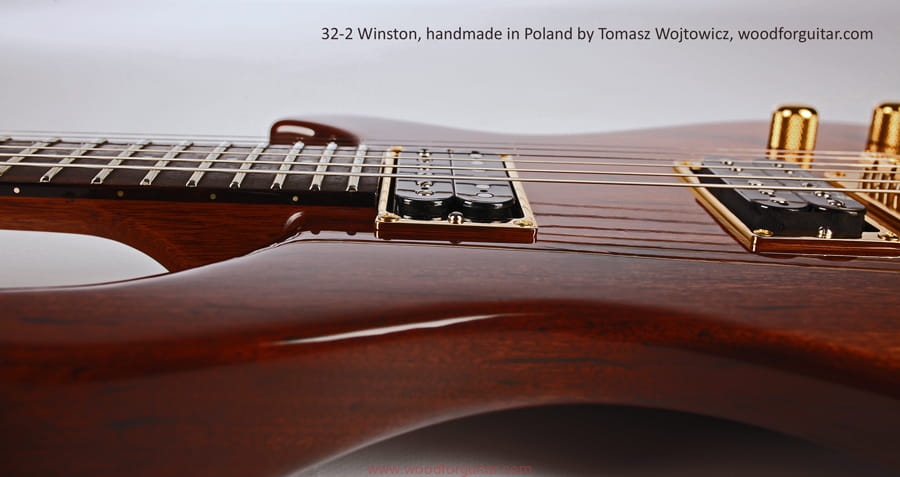
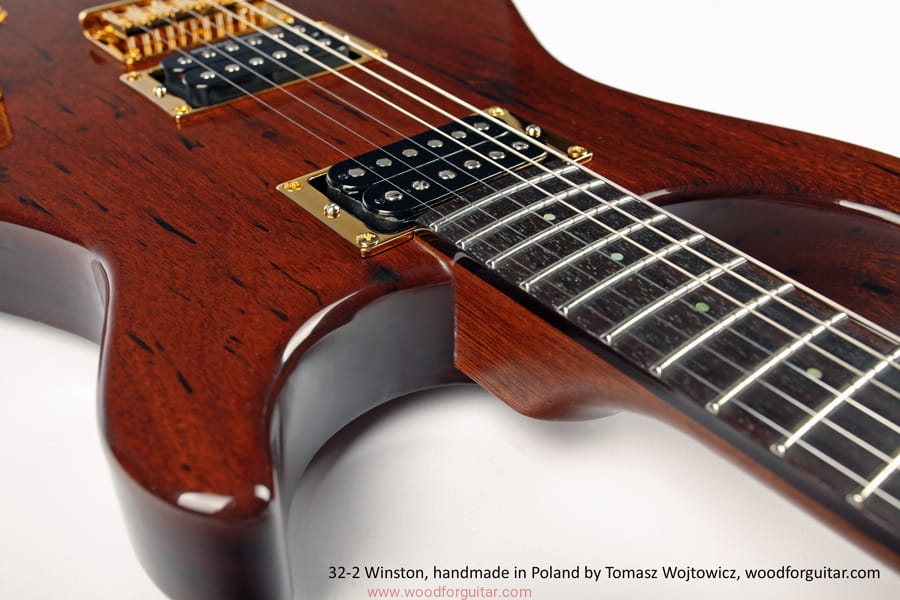
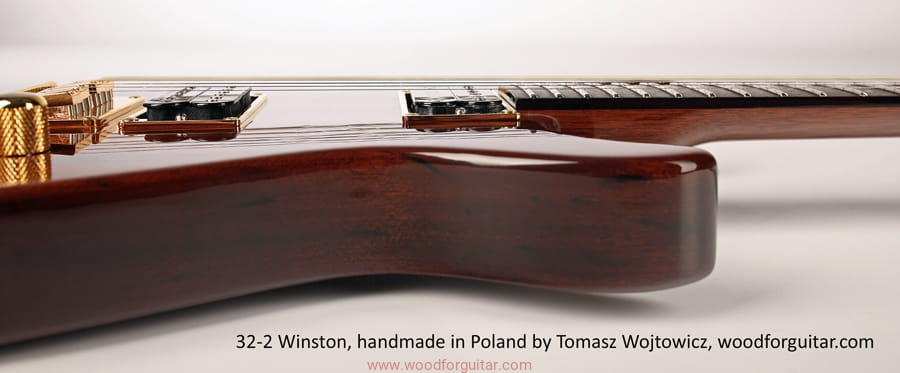
1 – piece African mahogany Entandrophragma cylindricum, medium density, thickness 43mm, length 425mm, width 332mm. The front of body is flat, the forearm profile is well noticable. The back of body is flat with deep ergonomic profiling. There is no additional top or facing, nor binding. The shape of body is my own project SCM Lizard, double cutaway, referring to the well known guitar constructions.
Neck
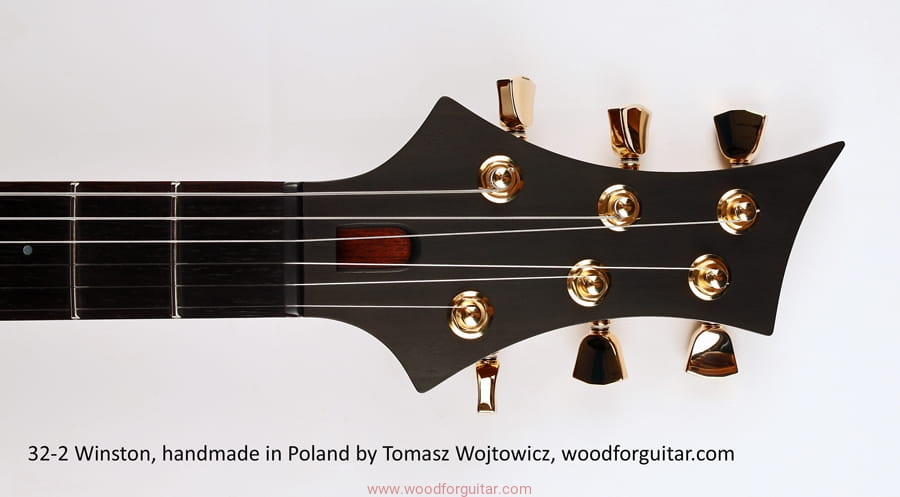
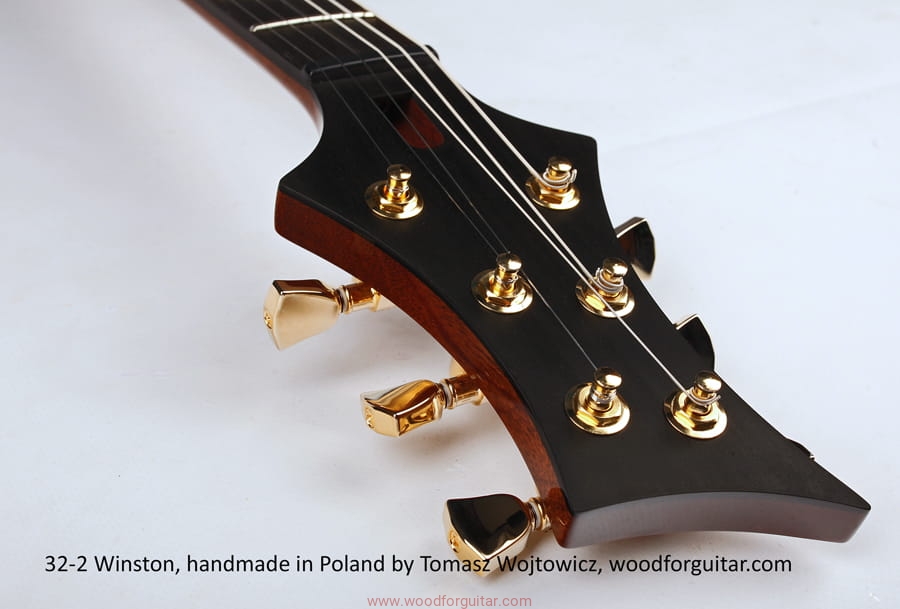
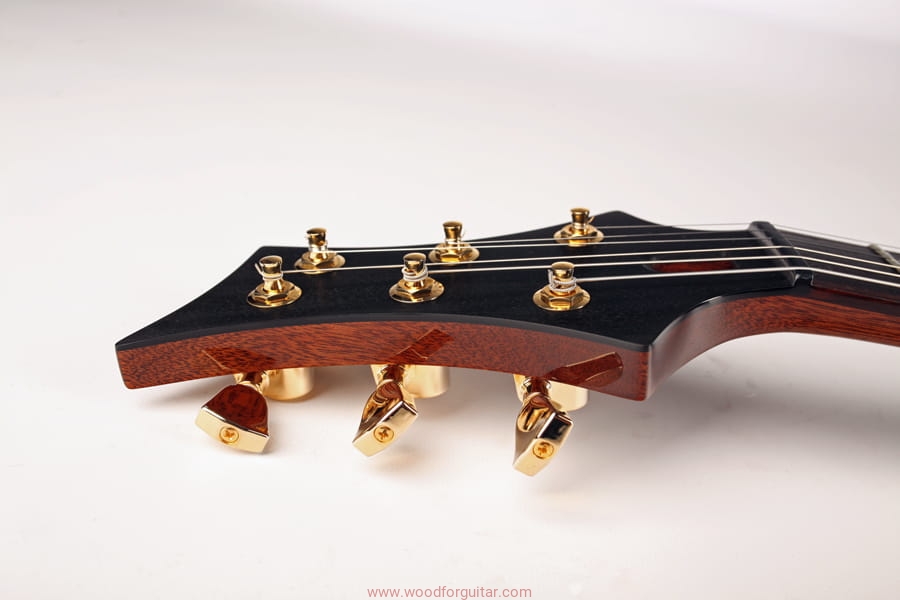
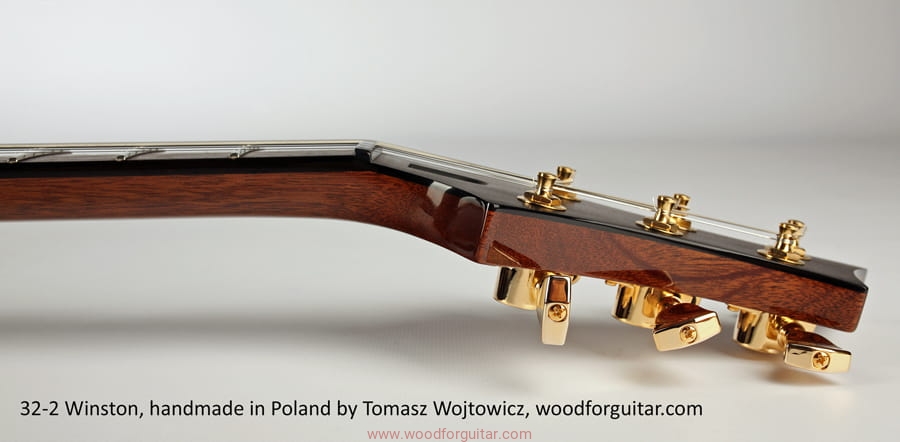
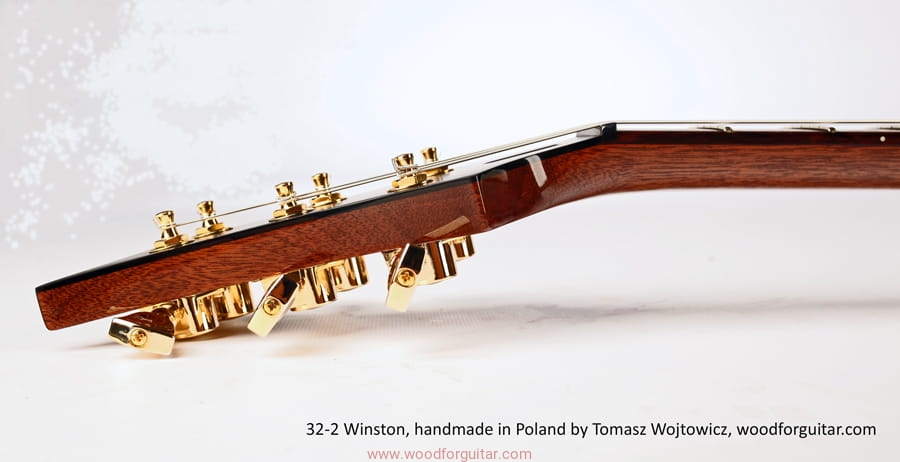
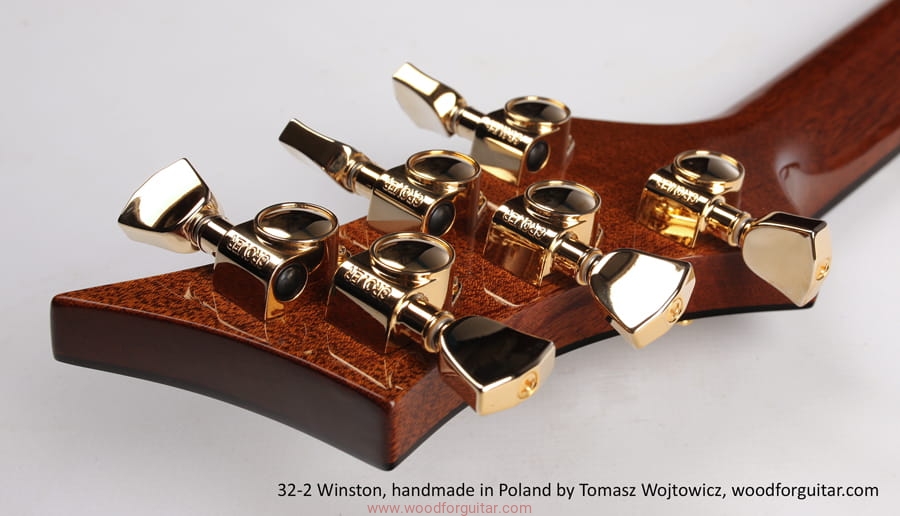
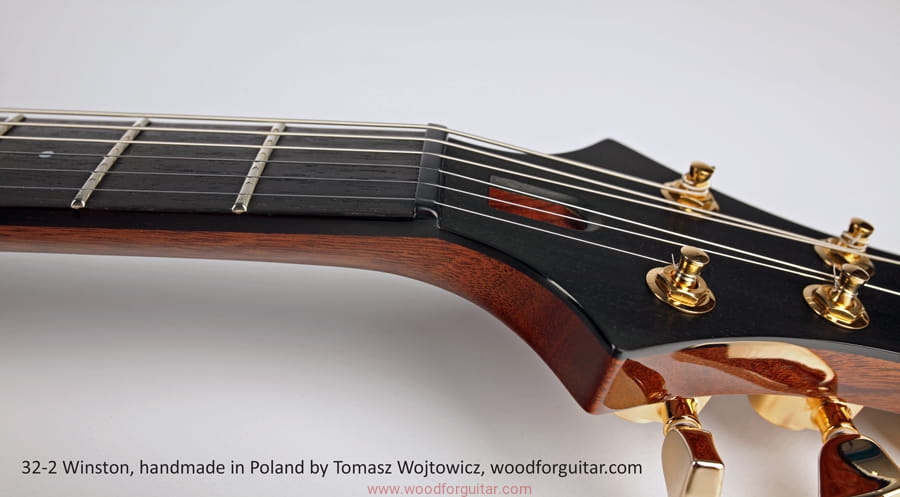
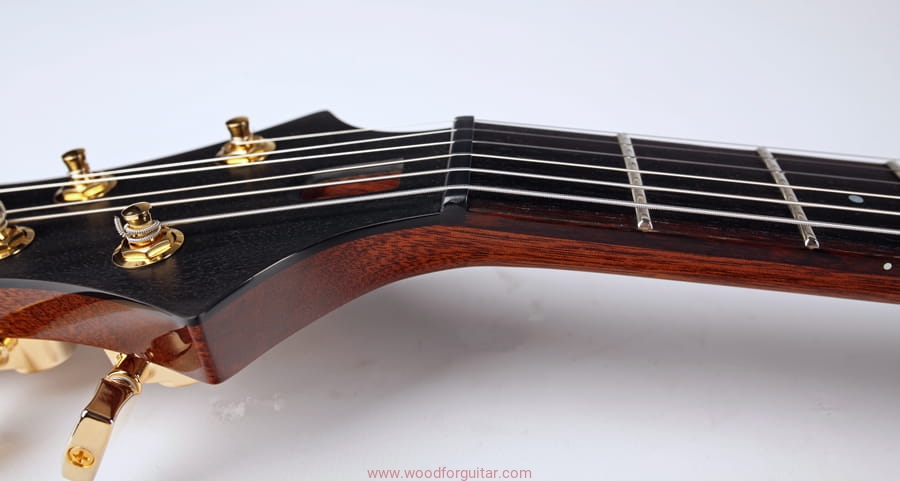
1 – piece African mahogany Entandrophragma utile, medium density, quarter sawn, glued-in (joint angle 0,5 deg., and 0,5 deg. cross angle), thickness at I fret 21mm, thickness at XII fret 22.8mm, width at nut 42.2mm, width at XXII fret 55.6mm, C profile around the I fret, C/D profile around the XII fret. The headstock is angled 14 deg. thickness 17mm around the E1/E6 keyholes and 16mm around the G3/D4 keyholes, facing is made of bare black African ebony, just sanded and impregnated with light oil. The top surface of the headstock should be impregnated every 6 months with a lemon oil, the same oil which is used for cleaning and impregnating fingerboards. The shape of headstock is my own project and is used in every guitar in the „25 guitars collection”.
Handmade truss rod is based on Martin type construction – one action, steel rod in U-shape aluminium profile. Additional vibration damping material was used. Note, do not use too much force when adjusting the neck relief. Adjustment should be done in very small steps, with sensitivity and caution, the neck reacts with some delay to screwing and unscrewing the truss rod nut. Both the rod and the adjusting nut are made of high strength stainless steel.
As with any guitar in which the neck is made of 1 piece of wood and its construction includes an angled headstock, keep in mind that the neck/headstock point is the least mechanically resistant place in the instrument. There is a thick ebony veneer at this location to make the place stronger, but when the guitar fall on the floor, the probability of breaking the headstock is very high. Always set the guitar (every guitar!) on a guitar stand or place it securely in the case, even if it's just for a while.
Fingerboard
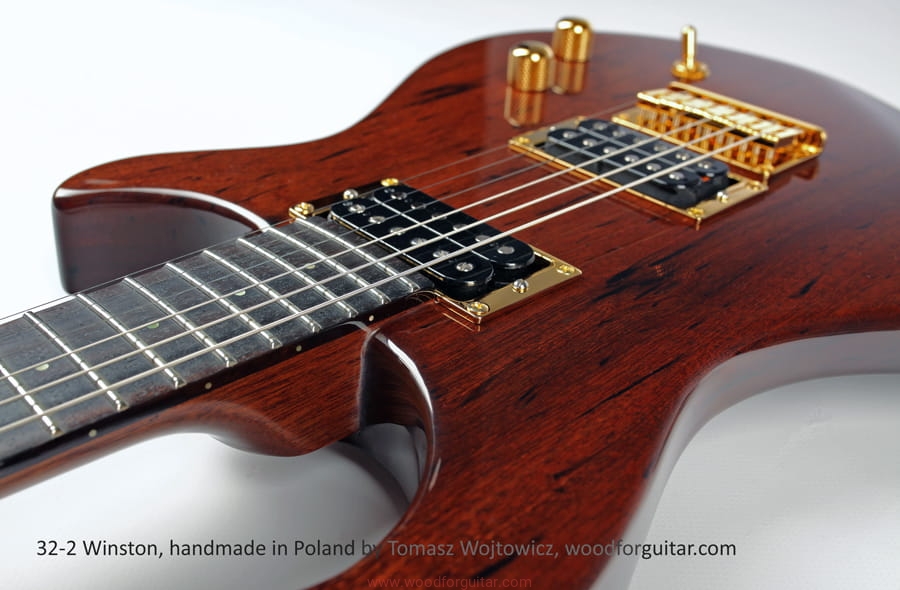
1 – piece Indian rosewood Dalbergia latifolia, very dark brown - nearly black, quarter sawn, binding unapplied, scale 25” (635mm), radius 12” (305mm). The top surface of fingerboard is mat sanded and impregnated with light oil. It needs cleaning and impregnating with lemon oil from time to time.
The following components are mounted in the fingerboard:
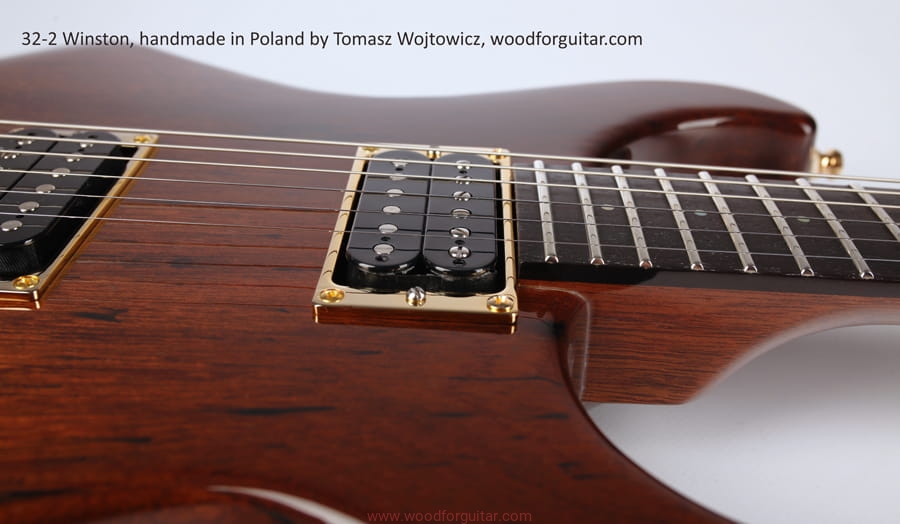
- 22 frets Jim Dunlop Jumbo 6110 Hard, height of crown 1.4mm
- front markers – gold MOP 3mm dots
- side markers – gold MOP 1,5mm dots
- nut made of Black Tusq XL Graph Tech
Notes:
Any slight deepening of string slots in the nut should be performed no sooner than after approximately 200 hours of playing the instrument.
The nut was fitted in the fingerboard before the instrument was finished with lacquer. When replacing worn frets in the future, frets with a crown height of no more than 1.4mm should be used. This way, you will avoid the complicated and expensive replacement of the nut with the refilling of the lacquer coating.
Note, Dalbergia latifolia is listed on the CITES list. If the wood is used in the instrument, an export permit is required when leaving the European Union. This can also make it more difficult to move quickly with the instrument in the future when traveling between different countries of the world.
Pickups
- neck pickup – Seymour Duncan ‘59 SH – SH1N 2C black, vintage 1-conductor lead wire, 7,6kOhm, Alnico 5, modified PAF with stronger output
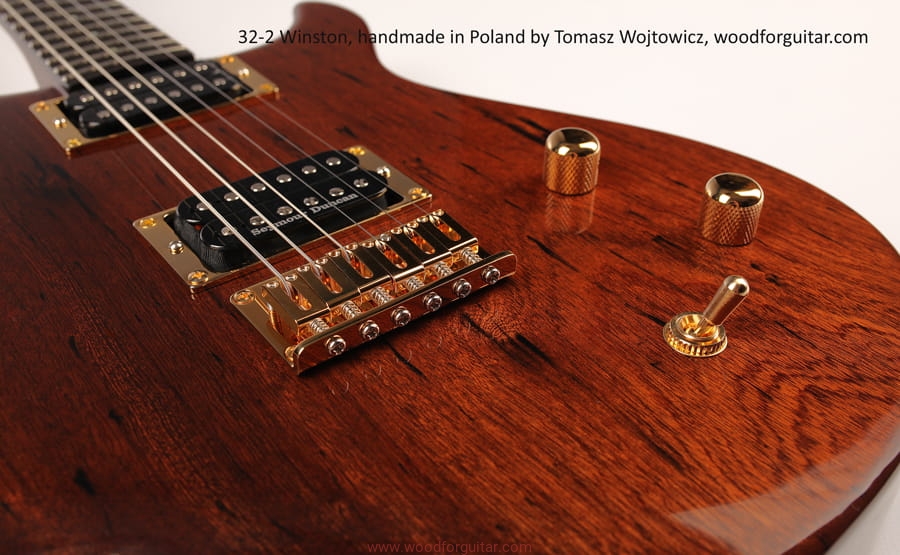
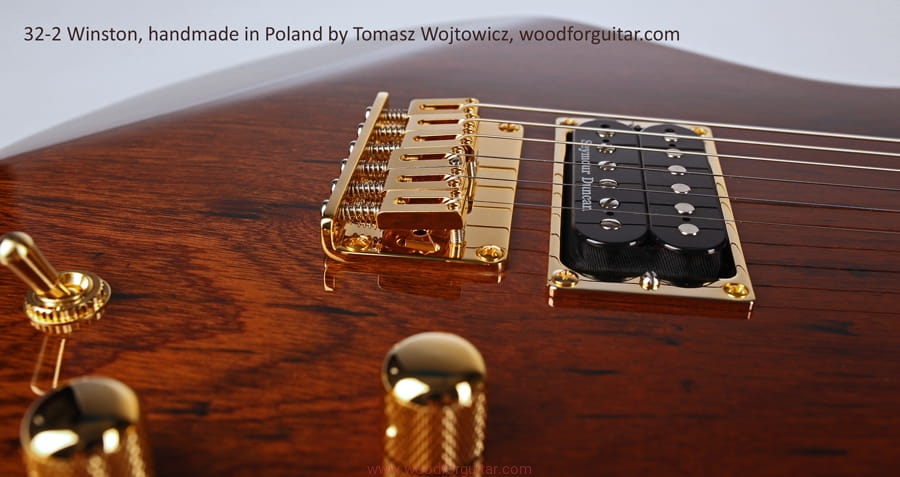
- bridge pickup – Seymour Duncan Custom 5 SH 14B 4C black, 4-conductor lead wire, 14,1kOhm, Alnico 5, very familiar sound character to ’59 model, but hotter output, more aggressive and more highs
The pickups are fixed in low gold plated metal frames. Both ‘59 and Custom 5 have quite high output that may seem to be too powerful for some guitarists who are accustomed to classic vintage tones . However, the quality of the electronics allows you to freely adjust the volume of the instrument to the lowest levels without losing the quality of the sound.
Like any character of the sound and used parts, the pickups are subject to the player's assessment and are associated with his or her habits and preferences. In the case of incompatibility of the sound character of the used pickups, please do not decide whether to replace the pickups too fast.200 hours of play is a necessary minimum time to learn the capabilities of the instrument, get used to its character, find the right settings in amplifier and effects. Beyond that, please always keep in mind that Winston does not like changes.
Electronics
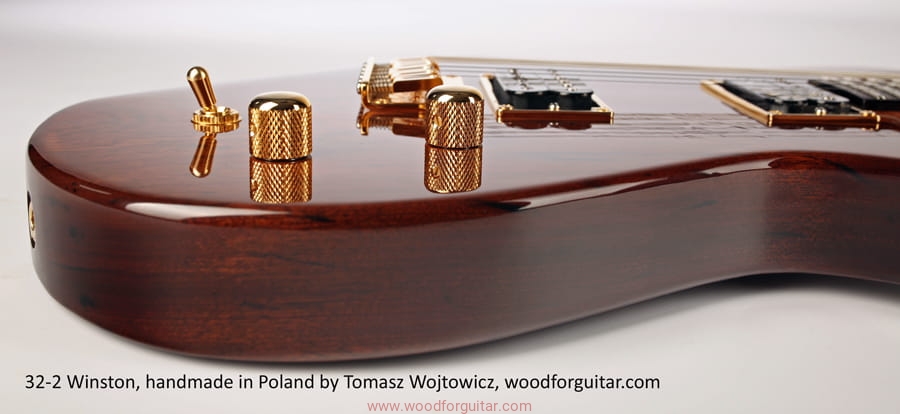
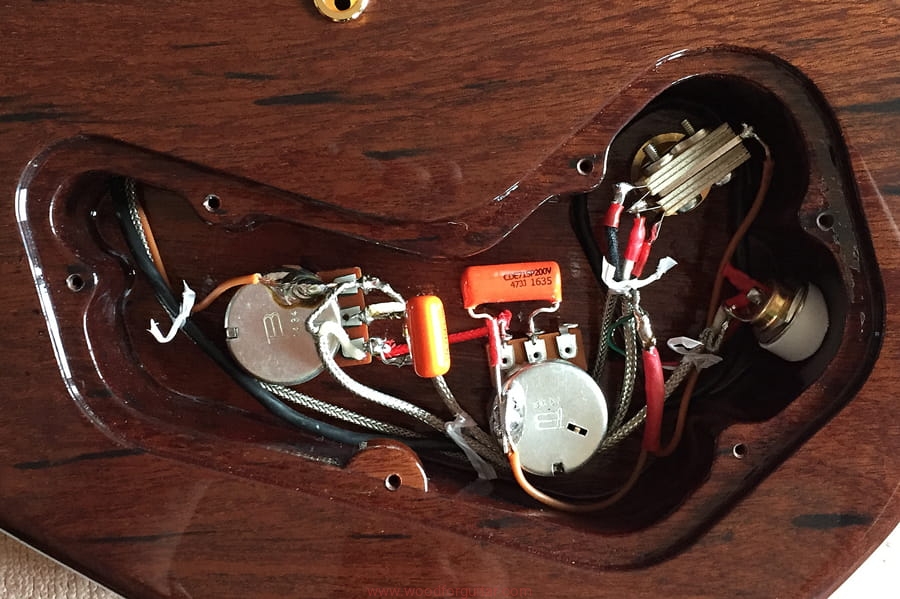
- 1 x volume potentiometer Bourns Low Friction 500k Audio + filter based on Orange Drop poliprophylene capacitor, preventing loss of high tones while volume decreasing
- 1 x tone potentiometer with bypass click Bourns No-Load GTN 500k Linear + Orange Drop poliprophylene capacitor
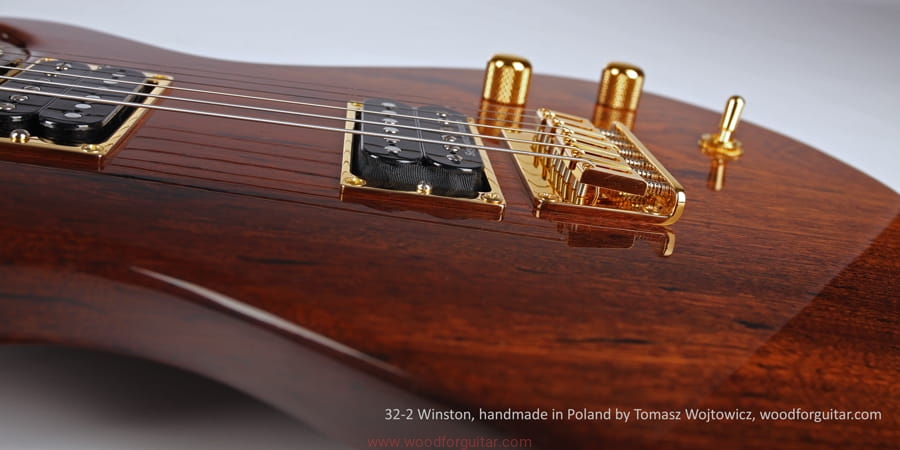
- 3-position gold coated toggle switch Goldo
- gold plated cylindric Switchcraft SC-154 output jack
The control pocket cover is handmade of tortoise.
Bridge
Fixed, gold plated Gotoh GTC101 with brass saddles. Fine designed and performed, tested for years, with the possibility of adjusting the compensation and height for each string separately.
Tuning keys
Traditional, fine quality, gold plated Grover keys with modern tulip buttons, 14:1 gear ratio
Other hardware
- strap buttons - Warwick Security Lock, gold plated (Be sure and periodically check if the nuts fastening the mounting on the strap are firmly tightened!)
- knobs – gold plated Gotoh VK19-1 dome type with a locking screw
- string ferrules – gold plated Gotoh ferrules, 8.3 mm mounting diameter, with an outer edge extending over the surface of the back of body
Strings
D’Addario 10-46 EXL 110 nickel wounded
Finish
The surface of the instrument was finished by hand with a clear, glossy polyurethane lacquer. The finishing process consisted of the following stages:
- contrast wood pore filling and sanding
- Pre-coating with tinted lacquer
- re-coating with tinted lacquer
- sanding
- lacquering with tinted lacquer
- 4-leyer lacquering
- 3-week stabilization of lacquer
- sanding the applied lacquer layers
- lacquering with tinted lacquer
- 5-layer lacquering
- 5-week curing process
- multi-stage wet sanding
- pre-polishing
- finish polishing
- waxing the surface
After finishing process, a gloss and transparency was achieved. Significant darkening of wood is the result of direct application of pour filler and polyurethane and is a deliberate effect. Owing to the characteristics of the lacquer and the relatively thin coating applied, the penetration of the lacquer into the wood structure is noticeable over time. As a result, looking closely at a distance and at some angles will be visible delicate, minor and major bumps directly above the wood pores. The smooth surface will get some porous-like structure.
The applied lacquer deepens the oldschool character of the instrument, protects the wood from moisture, dirt, scratches and dents. It is not resistant to point strokes with hard objects, it is not resistant to scratches caused by sharp objects. As a result of the specific surface finishing method, the lacquer coating of the instrument has minor irregularities, indentations, collapses, abrasions, mottling, straight and circular scratches and micro scratches that are visible from a close distance at certain angles to the illumination.
Weight
Total weight of the guitar with fixed hardware is 3,9kg (+/- 0,1kg)
Accesories
- hexagonal key 5mm for truss rod adjusting
- hexagonal key 1,5mm for adjusting the height of saddles in the bridge
- Vileda soft mikrofibre cloth for cleaning
- ABS hard shell case, basic class, FX Cases
Adjusments
The guitar is initially adjusted and ready to play. Any additional adjustments, according to your preferences, are to be made by you or by person servicing your instruments. To achieve extremely low string action, any micro leveling of the frets should be performed no sooner than after approximately 200 hours of playing the instrument.
A few more words about Winston
The instrument was performing for a very long time. After each cutting, routing or profiling any wooden element, it was set aside for several months to stabilize and any occurred deformation was corrected.This procedure has provided the natural, very high structural stability of all components of the ready instrument and any future deformation, in normal use and in typical housing, studio or stage conditions is unlikely.
The sound of the guitar is typical for mahogany bodies with a set-in/glued-in mahogany neck. It is fat, massive, warm but selective and rich in harmonics. Theoretically, rosewood fingerboard should make sound creamy and smooth, but in fact here, adds roughness and aggression (it is also the result of use the ’59 and Custom 5 pickups, and hard jumbo frets).
In one case Winston seems to be malicious. With a standard tuned instrument, in one position, there is a much shorter sound sustain (string G at the XII fret) than in any other position. Theoretically it is dead note (deaf note) or wolf note. For the moment, it is not known if it can be fixed. If not, during the play it is better not to stop for longer on G / XII.
Creating Winston was a very long process and probably all the possible emotions accompanied during work. This is why the guitar has its own personality.
For whom is this instrument
For a person who does not need great logo on the headstock, and more importantly is the sound and the uniqueness of the hand-made instrument. For a person who does not put a guitar in a glass-case to look at a glass-mirror thick colourful finish. For a person who plays the instrument a few hours a day, likes oldschool instruments and a natural dark aged mahogany, and does not mind the fact that the guitar gently wears out of use, loses some of the glow and flash of the gilt parts. For the person who cares for the instrument, periodically impregnates exposed wooden components, puts the guitar on a guitar stand so it does not fall down. For a person with an open mind.
What words did people say who tried the instrument
“This gentleman is a real aggressor”
“Sound is warm and fat, but very rude”…
“Quite different than Bernard. Familiar to Teddy, but sounds in its way”…
“Like a jet plane”…
“Once again, there is no logo on the headstock. I don’t like it”…
“I prefer 9-42 strings, but I think 10-46 set is better for so big frets”…
“I like this rosewood. It is black, nice black”…
“Yes, I think it is good, oldschool guitar”…
“Listen, I set the tone pot at 11 and the sound is not so biting”…
“There is everything I need in this guitar”…
“Genuine sound, once again”…
“Everything is fine, except G-string at XII fret. There must be the way to fix it”…
“One deaf note in one position, but great sound in the others. There are always pluses and minuses”…
“I don’t know how to say it… this guitar is alive”
32-2 Winston was priced at 2500 EUR – the price is valid until 31 December 2018r.
If Winston does not find a happy buyer in a given year, in each subsequent year its price will increase by 150 EUR.
The guitar price for year 2019 has been set at 2650 EUR and is valid until 31 December 2019 (updated 01.01.2019).
The guitar price for year 2020 has been set at 2800 EUR and is valid until 31 December 2020 (updated 05.01.2020).
The guitar price for year 2021 has been set at 2950 EUR and is valid until 31 December 2021 (updated 01.01.2021).
The guitar price for year 2022 has been set at 3100 EUR and is valid until 31 December 2022 (updated 15.01.2022).
The guitar price for year 2023 has been set at 3250 EUR and is valid until 31 December 2023 (updated 07.01.2023).
The guitar price for year 2024 has been set at 3400 EUR and is valid until 31 December 2024 (updated 06.01.2024).
The guitar price for year 2025 has been set at 3550 EUR and is valid until 31 December 2025 (updated 01.01.2025).
The guitar price for year 2026 has been set at 3700 EUR and is valid until 31 December 2026 (updated 01.01.2026).
This instrument is subject to a 24-month limited guarantee. The guarantee does not cover the wear and tear during typical use of components such as strings, frets, nut, lacquer surfaces. The guarantee does not cover mechanical damage resulting from misuse.
Shipping to a country belonging to the European Union
The price is valid if sales and shipping goes to a country in the EU. Shipping cost is 68 EUR maximum and It depends on the country where the shipment takes place. Shipping takes place within 10 working days of receipt of payment, it is necessary time to exchange strings, pre-adjustment and settings.
Shipping to a country not belonging to the European Union
If the guitar is shipped to a country outside the European Union, the price of the guitar will be increased by the cost of obtaining an export permission for the export of a product in which the CITES listed wood is used. Thus the time of shipment will depend on the time of issue, the delay in shipping for this reason may be about 4-6 weeks, but it can also be much longer. The cost of obtaining an export permission is up to 58 EUR. The maximum cost of shipping the item is 115 EUR and is dependent on the country to which the shipment will be addressed. In case of overpayment related to the costs of obtaining the export permission and the shipment of the guitar, the overpayment will be refunded to the buyer within 5 working days. Note, the import permission for the instrument, which uses CITES-listed wood, if required, the buyer is obliged to arrange in his/her own country and at his/her own expense. The instrument can’t be shipped before both export and import licenses are issued. It is always a good idea to check before you buy if there are other import restriction in your country on wood species, mother of pearl (MOP) and other materials used in the guitar.
Please, contact me for more information,
Tomasz Wojtowicz
Tel. +48/ 602671930
e-mail: woodforguitar@gmail.com
Ostrzeżenia i bezpieczeństwo związane z produktem
Product warnings and safety
Oferowany produkt jest instrumentem muzycznym przeznaczonym do długotrwałego użytkowania. Nazwa sugeruje, że jest to instrument elektryczny, jednak sam w sobie nie stanowi zagrożenia porażenia prądem, można przyjąć, że przetworniki zamieniające drgania strun na sygnał elektryczny nie generują większego napięcia, niż 10 mV. Uwaga, gitarę należy podłączać tylko i wyłącznie do atestowanych dedykowanych urządzeń wzmacniających i przetwarzających wysyłany z instrumentu sygnał.
Reakcje alergiczne – mogą wystąpić różne reakcje alergiczne, w przypadkach szczególnych należy zgłosić się po poradę medyczną.
Ryzyko zranienia – zachować szczególną ostrożność, obcięte końcówki strun przy stroikach są ostre i mogą zranić. Instrument waży ponad 3 kg, przy upadku np. na nieosłoniętą stopę może zranić. Wystające elementy instrumentu mogą zranić przy nagłym kontakcie.
Dzieci – przedmiot nie jest przeznaczony do zabawy, użytkowanie przez dzieci jest dozwolone tylko pod nadzorem osoby dorosłej.
Uzależnienie i wpływ na stan psychiczny/fizyczny człowieka – charakter produktu może uzależniać, czego efektem jest np. poświęcanie zbyt dużej ilości czasu na użytkowanie produktu. Wielogodzinna gra na instrumencie może powodować m.in. nadmierne napięcie poszczególnych mięśni, należy regularnie przeprowadzać przerwy w grze oraz wykonywać ćwiczenia gimnastyczne ukierunkowane na poprawę funkcjonowania obciążonych partii ciała.
Przechowywanie – przechowywać w suchym miejscu w warunkach domowych-pokojowych, w dedykowanym stojaku lub futerale w pozycji stojącej, z dala od bezpośrednich źródeł ciepła.
The product is a musical instrument intended for long-term use. The name suggests that it is an electric instrument, but it does not pose a risk of electric shock; it can be assumed that the pickups that convert string vibrations into an electrical signal do not generate a voltage greater than 10 mV. Please note: the guitar should only be connected to certified, dedicated devices that amplify and process the signal sent from the instrument.
Allergic reactions – various allergic reactions may occur; in exceptional cases, seek medical advice.
Injury hazard – exercise extreme caution; the cut ends of the strings near the tuning machines are sharp and may cause injury. The instrument weighs over 3 kg and could cause injury if dropped, for example, on an exposed foot. The instrument's protruding parts may cause injury upon sudden contact.
Children – this item is not intended for play; children should only use it under adult supervision. Addiction and impact on a person's mental/physical state – the nature of the product may be addictive, resulting in, for example, spending too much time using the product. Playing an instrument for many hours can cause, among other things, excessive muscle tension; it is important to take regular breaks from playing and perform exercises aimed at improving the functioning of the affected body parts.
Storage – store in a dry place at home, in a dedicated stand or case, in an upright position, away from direct heat sources.
Producent/odpowiedzialność za produkt
Manufacturer/product liability
Wszystkie produkty dostępne na stronie internetowej „Wood For Guitar”/woodforguitar.com
All items available on the "Wood For Guitar" website/woodforguitar.com
TOMASHEK Tomasz Wojtowicz
Legionów Polskich 137/37
41-310 Dąbrowa Górnicza
Polska
Tomasz Wojtowicz
Tel. +48/ 882803692
woodforguitar@gmail.com