


- Tonewood species(2304)
- Spruce tonewood(1)
- Tonewood for acoustic instruments(18)
- Torrefied, Roasted, Thermo-aged wood(206)
- Fingerboard blanks(866)
- Body blanks(240)
- Tops/Facings(248)
- Neck blanks(703)
- Headstock veneers(199)
- Splices/Veneers(51)
- Private stock(119)
- Occasions(2)
- Wood for DIY(19)
- Musical instrument bodies(0)
- Handmade guitars(12)
- Musical instrument necks(0)
- Carbon reinforcement rods(2)
- New products
- Products on sale
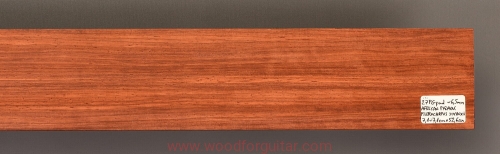
PADAUK guitar fingerboard blank


Description
Wood: AFRICAN PADAUK Pterocarpus soyauxii, dimensions:
width: 7,1 – 7,1 cm
length: 52,6 cm
thickness: 6,5 mm
- density: 740 kg/m3
(1 pc of padauk wood)…
Padauk is included in the CITES list. We sell and ship this variety only to European Union countries.
for a guitar fingerboard or other instrument under which you can use the item. The pictures show this particular piece of wood. Pre-sanded surfaces, dry, ready for use. Dimensions for own purposes to be carried out independently. As always when working with wood, we recommend to domesticate it at the place of destination for a period of several weeks. Everyone, even the most stable type of wood is not indifferent to changes in humidity, temperature and other external factors.
Additional information:
Other names: Padauk, Padouk, Paduak, Paduk, Padok, Vermillion
Padauk is a tree that grows in the central and tropical western parts of Africa. Its wood with characteristic orange-red-reddish-brown color with brown clear years and large deep pores is strongly naturally soaked with its own oils. Hard wood, dense, much harder to work than mahogany, or even hard maple. Over time the colour is getting dark brown colour and nothing in the look of fresh Padauk stays in his appearance. In appearance it is completely opposite of hard maple (maple Acer saccharum), while acoustically behaves almost identical to hard maple and can be its direct replacement (as a tonewood, not a wood looking the same). Due to the high specific weight, we suggest to use Padauk only for necks, or leyers of neck, fingerboards and thin tops of guitar/bass bodies. Perfectly behaves in combination with mahogany, rosewood, ebony and related species, it is much more stable than any variety of maple and has a wonderful feature: just sand it and be ready for use, it would be a sin to use any lacquer coat on padauk. The neck, just sanded and polished, made of this wood is very strong, fast in reaction and smooth, satin to the touch, despite the noticeable large pores. From time to time it is enough to wipe it with the cloth dampened with lemon oil, doing the same thing as cleaning the rosewood or ebony fingerboard. During machining (cutting, grinding and chiselling), be careful not to cause splitting off, just be careful. Wonderful wood for instruments. We recommend.